| Date & Time | 30 June 2026 |
|---|---|
| Location | Webinar |
Exploring human-relevant in vitro and in silico approaches for disease modelling and therapeutic innovation
Despite affecting an estimated 30 million people across Europe, about 5% of rare diseases currently have an approved treatment. Emerging human-relevant methodologies, including patient-derived organoids, organ-on-chip systems, and advanced computational models, are creating new opportunities to better understand disease mechanisms, identify therapeutic targets, and improve the translation of research into clinical benefit.
Webinar description
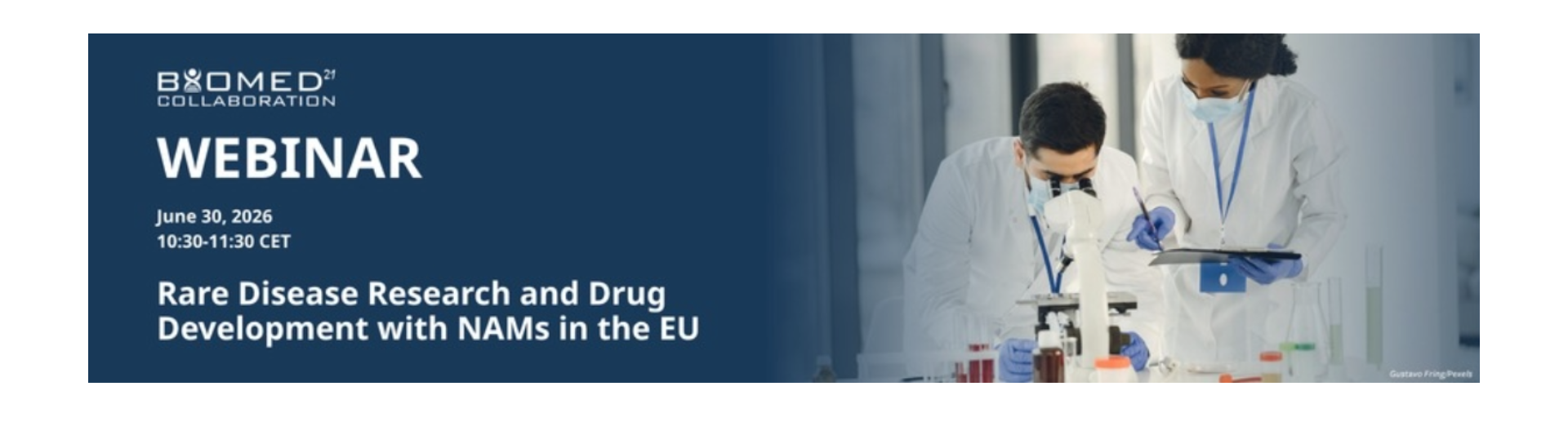
BioMed21 (Biomedical Research for the 21st Century Collaboration) invites you to a 60-minute webinar exploring how New Approach Methodologies (NAMs), including advanced human-relevant in vitro models and in silico technologies, are transforming rare disease research and drug development.
The webinar will bring together experts from academia, policy, and biomedical research to discuss innovative approaches ranging from retinal organoids and retina-on-chip systems to computational modelling and AI-driven strategies for therapy development.
Topics will include:
- Human-centric strategies for rare disease research
- hiPSC-derived organoids and organ-on-chip technologies
- In silico modelling and computational approaches
- Translational opportunities and challenges for NAMs in therapy development
- European research and policy perspectives
Draft agenda
- Advancing Human-Centric Strategies for Rare Disease Research: A European Research Policy Perspective
Francesca Pistollato – Humane World for Animals - Human retinal organoids and retina-chip platform for modeling disease and gene therapy
Kevin Achberger – University of Tübingen - Human-Centric In Silico Modeling for Rare Disease Research and Drug Development
Francesco Pappalardo – University of Catania & the COMBINE Group - NAMs in Rare Disease Therapy Development: Where and When Do They Fit?
Manoe Janssen – Radboudumc
Date and time
June 30, 2026 | 10:30–11:30 CET
Learn more and register here.