PMNET Forum 2026 | 8 October 2026 | Riga, Latvia
How can patients become genuine partners in medical research rather than simply participants or sources of data? How can their rights be protected while enabling research, particularly in rare diseases where international collaboration is essential?
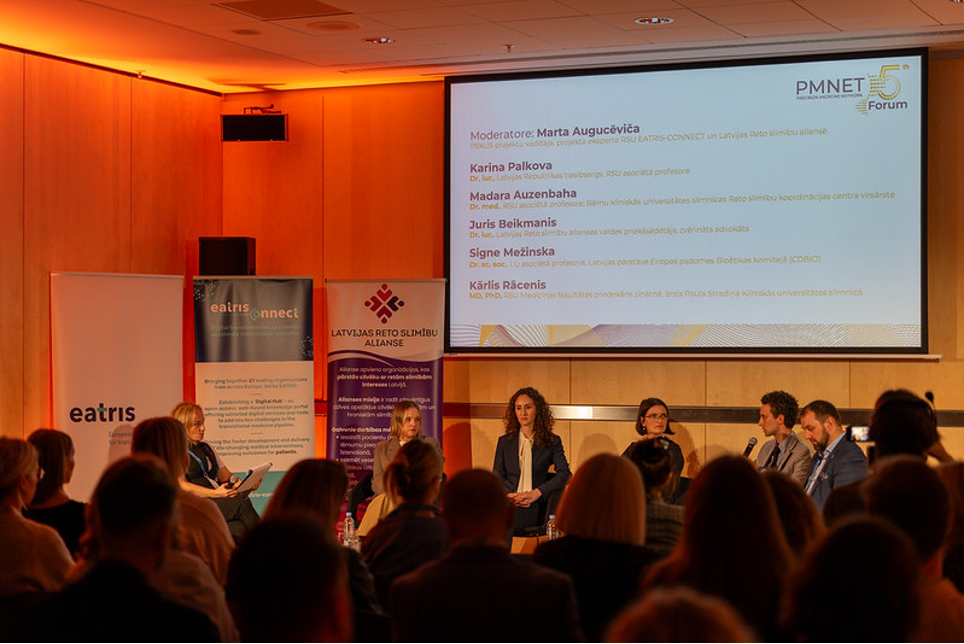
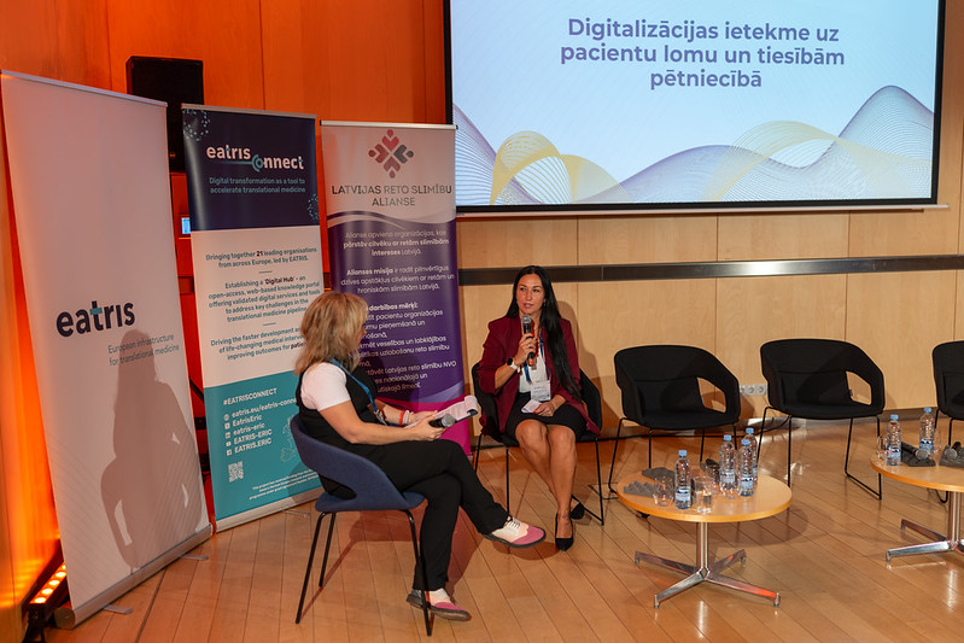
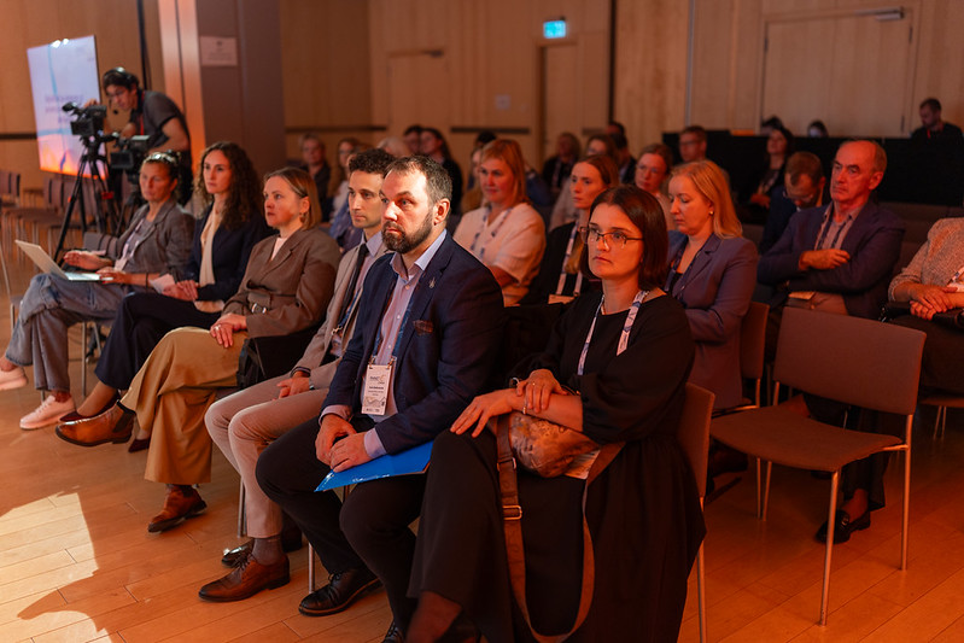
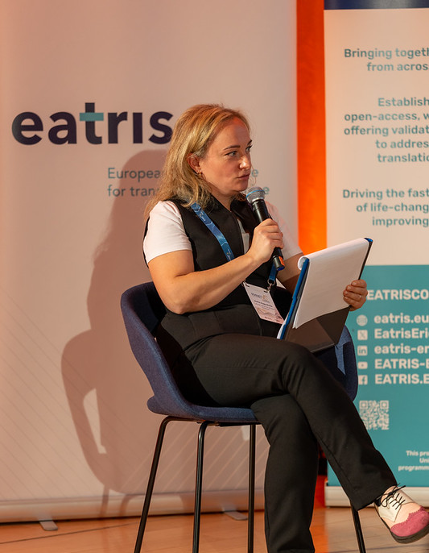
These questions shaped the session “The Impact of Digitalisation on the Role and Rights of Patients in Research” at the Precision Medicine Networking (PMNET) Forum in Riga. The session was moderated by Marta Augucēviča (Rīga Stradiņš University, EATRIS-CONNECT) and organised by the EATRIS Latvian node, coordinated by RSU, together with the Latvian Alliance of Rare Diseases within the EU-funded EATRIS-CONNECT project. It brought together patient representatives, clinicians, researchers and legal experts to examine the opportunities and challenges of meaningful patient engagement.
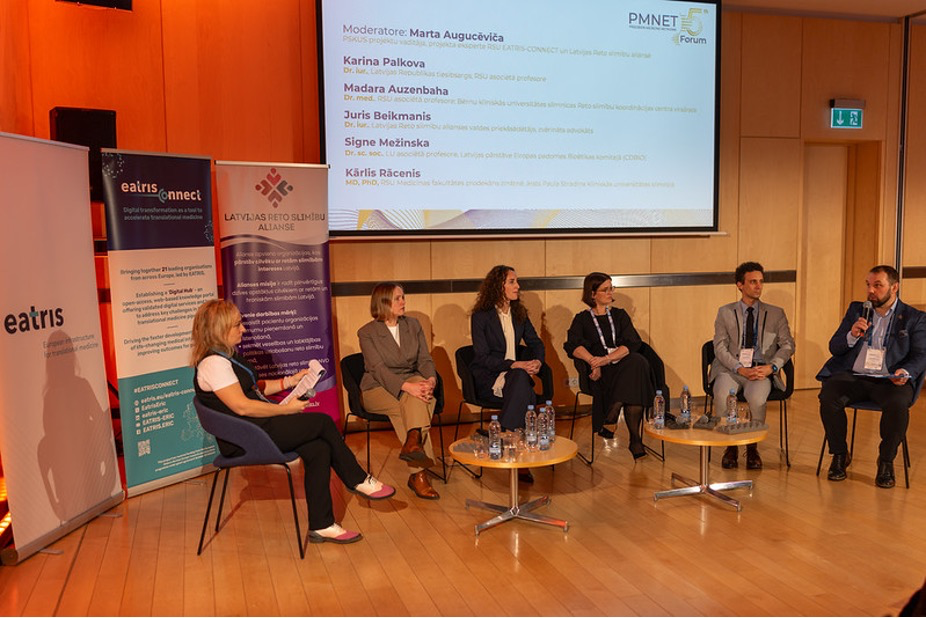
The panel discussion brought together:
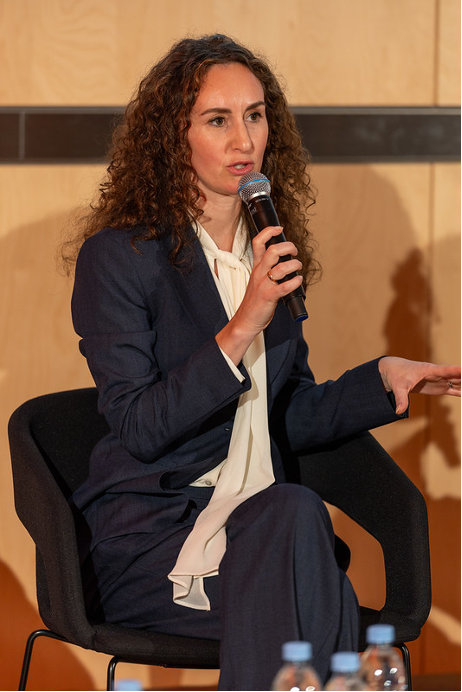
- Dr. iur. Karina Palkova, Ombudsperson of the Republic of Latvia;
- Dr. med. Madara Auzenbaha, Associate Professor at RSU and Head Physician of the Rare Disease Coordination Centre, Children’s Clinical University Hospital;
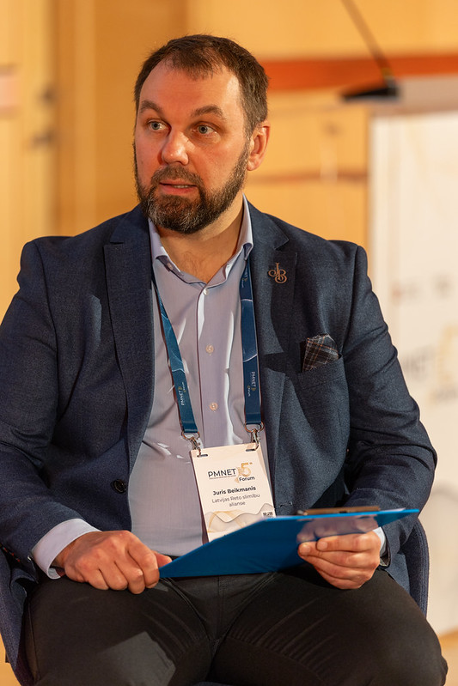
- Dr. iur. Juris Beikmanis, Chair of the Board of the Latvian Alliance of Rare Diseases;
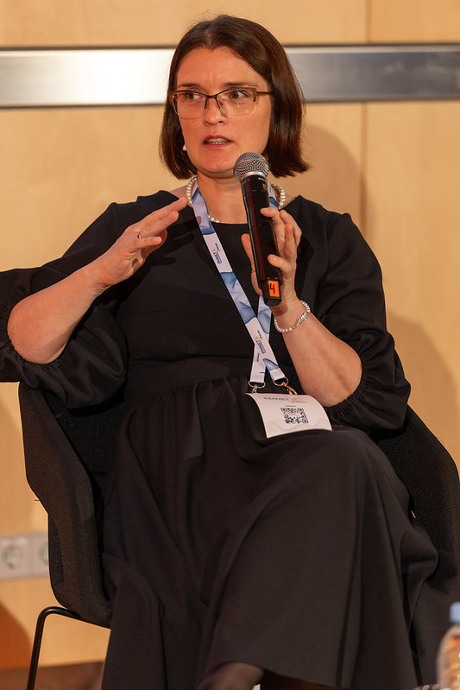
- Dr. sc. soc. Signe Mežinska, Associate Professor at the University of Latvia;
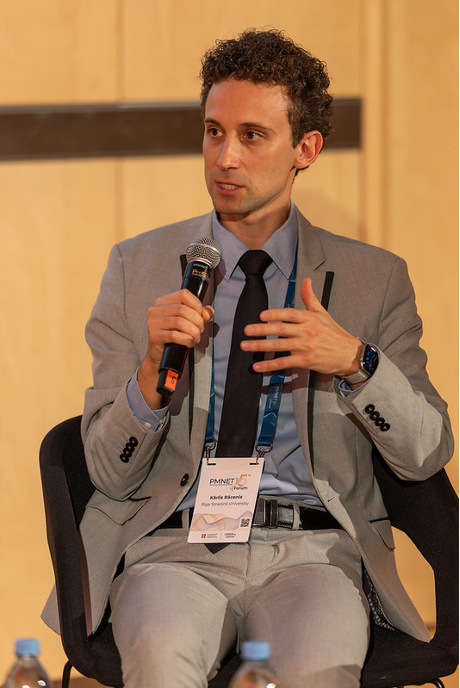
- Dr. med. Kārlis Rācenis, Vice-Dean for Science of the Faculty of Medicine at RSU and physician at Pauls Stradiņš Clinical University Hospital (PSCUH).
Research as a source of hope
The discussion opened with a personal account from Sintija Bergmane, founder of a Latvian ultra-rare disease association, whose daughter lives with a progressive neurological condition for which no treatment is currently available.
Her family’s search for research opportunities led them to international researchers and other affected families. Their experience demonstrated the importance of cross-border collaboration for rare diseases, where patient populations are too small to support research within individual countries.
It also highlighted patients’ willingness to contribute data, time and resources to advance research. However, families expect transparency in return: they want to understand how their information is used, what progress is being made and whether research might eventually benefit patients.
Sintija Bergmane also described how families abroad help to fund research. A patient organisation set up by parents in the United Kingdom, working with a hospital charity, raised around £100,000, which helped attract a further c. £150,000 for a three-year gene therapy study. In Latvia, she said, a clear and trustworthy mechanism for donating to medical research is still missing.
Participants stressed that patients without established advocacy organisations, financial resources or international connections must not be left behind.
Juris Beikmanis, Chair of the Board of the Latvian Alliance of Rare Diseases, spoke from the perspective of patient organisations on whether people with rare diseases experience themselves as research partners or mainly as sources of data, and on whether digitalisation narrows or widens inequalities in access to research.
 |
 |
Making informed consent meaningful
Informed consent emerged as a central topic, particularly as artificial intelligence, digital health and international data sharing transform medical research
Bioethics expert Signe Mežinska highlighted the need to explain clearly how patient data may be used, including in AI development, commercial collaborations or research outside the European Union. Dynamic consent approaches, allowing patients to review and potentially adjust their preferences over time, were discussed as one possible solution.
However, panellists agreed that informed consent must be a dialogue rather than simply a signed document. Patients may trust their clinicians without fully understanding complex information, while healthcare professionals face practical challenges when explaining extensive documentation under time pressure.
The discussion underscored the importance of accessible information, clear responsibilities and consent procedures that balance patient protection with clinical realities.
Improving access to health data and research
The development and use of clinical registries was another major theme. Although Latvia has established disease registries, participants identified difficulties in developing detailed clinical registries that support research, treatment monitoring and patient recruitment for clinical trials.
Challenges include limited resources, administrative complexity, regulatory uncertainty and obstacles to international data sharing.
Kārlis Rācenis shared experiences from nephrology, where patient registries have helped identify suitable populations for clinical studies and create opportunities to participate in innovative research.
The European Health Data Space (EHDS) was recognised as an opportunity to strengthen European collaboration and make smaller national patient populations more visible in research. However, participants questioned whether Latvia’s infrastructure, regulatory frameworks and data quality are sufficiently prepared.
A recurring message was that data protection and responsible data sharing must advance together. Both are essential for public trust and effective research.
From participation to partnership
Panellists emphasised that meaningful patient engagement extends beyond recruiting patients for studies. Patients and patient organisations should contribute to defining research priorities, developing methodologies and evaluating outcomes.
Madara Auzenbaha addressed the practical barriers to involving patients and patient organisations in study design, drawing on her work with rare disease patients.
A practical example came from nephrology, the development of patient-reported outcome measures (PROMs). These tools capture patients’ experiences and concerns, including issues that may otherwise remain unnoticed during clinical consultations.
Such collaboration can improve both research relevance and healthcare quality, demonstrating the value of patient expertise alongside scientific and clinical knowledge.
Fair compensation for patient contributions was also discussed. Panellists referred to European research projects that allocate funding to patient organisations for their involvement. Participants recognised that meaningful engagement requires time, preparation and expertise, which should be appropriately acknowledged and compensated.
Integrating patient engagement into project planning and budgets from the outset was identified as an important step towards more sustainable collaboration.
Reducing barriers and strengthening cooperation
Digital technologies can make research more accessible through remote participation, improved communication and international data sharing. However, language barriers, digital literacy and unequal access to information risk excluding some patients.
Participants emphasised that opportunities to engage in research should not depend on an individual’s resources or ability to navigate complex healthcare systems.
The discussion also addressed collaboration with industry. Latvia’s relatively small patient populations and administrative requirements can make attracting clinical research challenging. Panellists recognised the potential benefits of ethical partnerships with pharmaceutical companies, provided transparency and patient interests remain central.
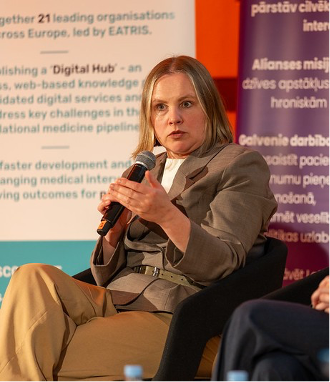
Karina Palkova, Ombudsperson of the Republic of Latvia, encouraged stakeholders to move beyond identifying problems towards developing concrete proposals for improvement. Constructive cooperation between patient communities, researchers, institutions and policymakers was seen as essential.
 |
 |
 |
 |
 |
Turning dialogue into action
The discussion demonstrated considerable commitment to patient engagement in Latvia, alongside persistent gaps between established principles and everyday practice.
Several priorities emerged: involving patients earlier in research, recognising and compensating their expertise, strengthening clinical data infrastructure, simplifying unnecessary administrative procedures and ensuring that vulnerable patient groups can access research opportunities.
For EATRIS-CONNECT, these insights are particularly relevant to ongoing activities on patient engagement in digital health and the responsible secondary use of health data. They reinforce the importance of practical guidance, capacity building and collaboration between national and European research communities.
Ultimately, the session highlighted a shared ambition: moving from research conducted with patient participation towards research developed in genuine partnership with patients, where their experiences and priorities help shape decisions and outcomes.