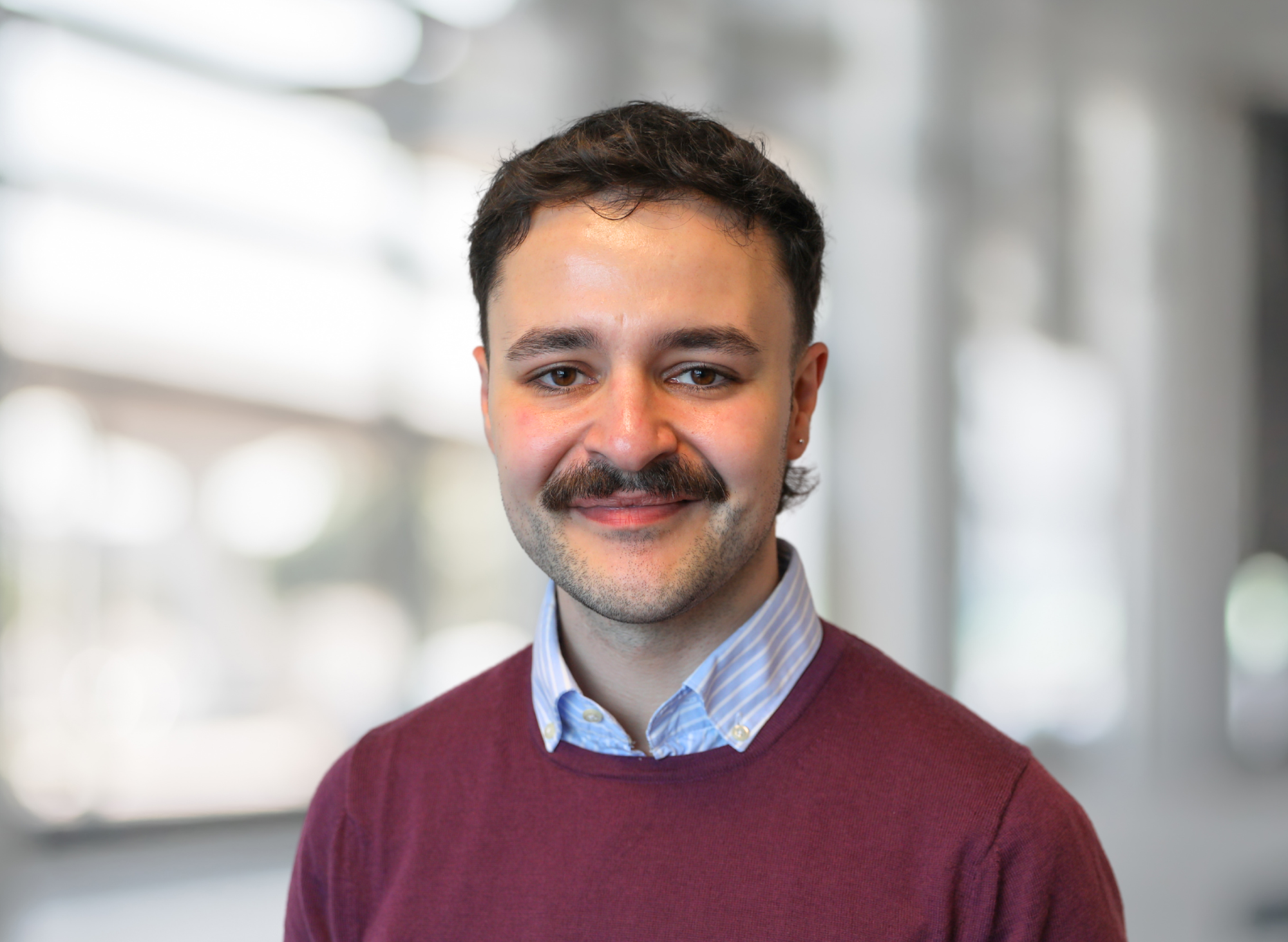
EATRIS Meets is an interview series that celebrates the amazing people in the EATRIS community. In this edition, we spoke with Nektarios Liaskos, Data Strategy Manager at EATRIS.
Tell us a bit about yourself
I was born and raised in Germany, am of Greek heritage, and have been living in the UK for the past 10 years. I have a scientific background that has gradually evolved from wet-lab research into translational research, digital transformation and data strategy.
I completed my PhD at the UCL School of Pharmacy, working on preclinical toxicology, biomarker research, and NMR-based metabolomics to study drug-induced liver injury, before joining the German Center for Neurodegenerative Diseases (DZNE), contributing to translational methodology, KPIs and FAIR data. Alongside academia, I have supported start-ups and SMEs developing AI-enabled tools and digital biomarkers, and I serve as Associate Editor for the Translational Process section of the Journal of Translational Medicine.
Today, at EATRIS, I bring those experiences together: science, translation, data, policy and European research infrastructures, with the aim of making knowledge, services and project outputs easier to find, reuse and translate into patient impact.
What is your role within EATRIS and what does a typical week look like for you?
I’m currently the Data Strategy Manager at EATRIS, working at the intersection of translational medicine, digital transformation and European research infrastructures.
A typical week is rarely typical. I might be attending project meetings, working with our digital transformation communities, leading the development of the Digital Hub as a way to make EATRIS knowledge, services and capacities easier to discover and use, or contributing to training, impact, policy and advocacy around digital transformation in personalised medicine.
I support several European projects, including RealiseD, OSCARS, CANDLE, and TRUSTroke, where my work ranges from AI-related data management and multistakeholder workshops to exploitation playbooks, data maturity models and Open Science competence building. I also engage with partners across Research Infrastructures, EOSC and related policy spaces to strengthen EATRIS’ role in Europe’s digital ecosystem.
The common thread is helping people connect complex knowledge, services and digital capacities in ways researchers can actually use.
What has been the highlight of your EATRIS experience so far?
A major highlight has been the opportunity to engage with people across Europe: researchers, clinicians, infrastructure colleagues, European Commission representatives, ministries and experts from many scientific disciplines.
I really value those moments when diverse actors come together around shared challenges and common goals. That is where the European spirit feels most tangible: realising how connected we are, and how much more we can achieve by working across borders, sectors and disciplines.
Those interactions constantly remind me why research infrastructures matter: they create spaces where expertise, needs and ideas can meet and become something more impactful.
What is translational research for you?
For me, translational research is the discipline of turning promising science into something that can genuinely improve people’s lives. In healthcare, for example, it is not a simple and linear pipeline from bench to bedside, but rather an iterative process connecting biology, clinical needs, data, technology, regulation, industry and patients.
Good translation means asking the right questions early, generating evidence that supports decisions, and ensuring that knowledge, data and methods can move effectively between people, institutions and stages of development.
Why did you decide to work in the translational medicine field?
I was drawn to translational medicine because it rewards curiosity across disciplines. I have always enjoyed moving between different fields: biology, technology, data, policy, regulation and people. Translational research gives that breadth a clear purpose. It is a space where being interdisciplinary is not a distraction, but a strength. I also like that it requires both scientific depth and the ability to connect ideas, communities and practical needs. For me, it felt like the right environment to use a broad set of interests and skills in service of something meaningful.
What advice would you give your younger self?
Have ambition, be curious, and follow your passion. Be brave, and don’t be afraid to take on difficult problems. But also breathe, don’t overindulge and don’t overthink every step. Find people who care about the same things you do but also listen carefully to people outside your own interests and expertise. Learn from others and share what you know generously. Be serious about the things that matter, but do not take yourself too seriously. And finally, be kind to yourself.
What do you like to do when you aren’t working?
Outside work, I try to spend less time in front of a screen: getting outdoors, seeing new places, spending time with friends and family, exploring good music and finding good food along the way. I also enjoy the occasional deep dive into the most random topics; my curiosity does not switch off particularly well.
If you were a drug, vaccine or diagnostic, what would you be and why?
I’d be a statin. Class effect only, no brand loyalty implied. They were impossible to forget after my MSc and PhD mentors used them to open up questions around drug discovery, safety and pleiotropy. Also, I appreciate anything that refuses to have just one job.
What would surprise people to know about you?
I am really bad at finishing books, I love to cook, and I can be a bit of an adrenaline junkie.