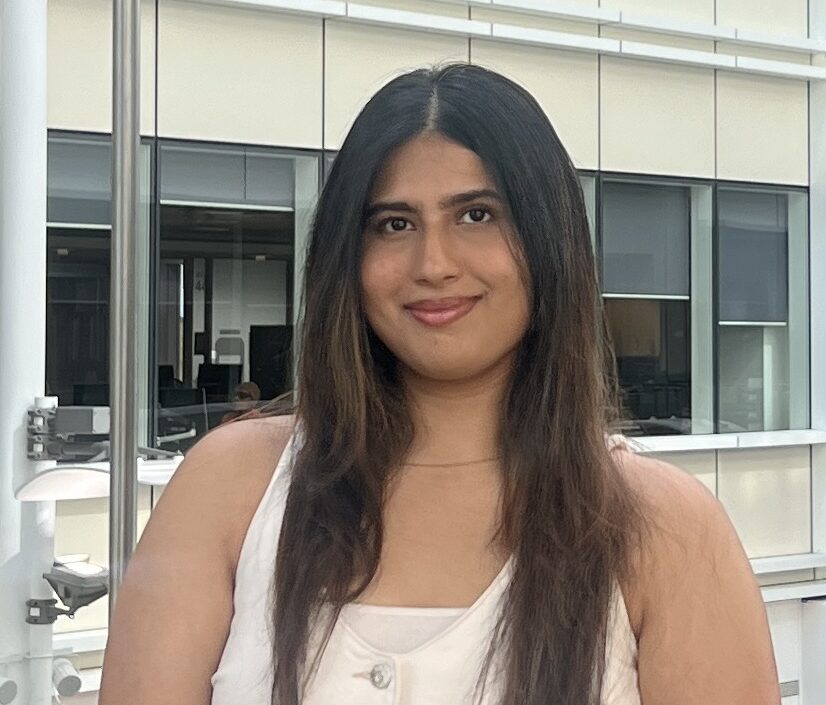
Amruta Sonawane, an MSc Drug Discovery and Pharma Management student at UCL, recently completed an internship with EATRIS working with the Innovation Team to develop a framework for evaluating the longer-term impact of its services. In this interview, she reflects on her work, what she has learned about translational research and how the experience is shaping her future career plans.
Tell us a bit about yourself.
I’m Amruta Sonawane, an MSc Drug Discovery and Pharma Management student at UCL. My interests sit at the intersection of clinical trial strategy and patient impact, things like evidence synthesis, patient stratification, and translating complex scientific data into clear strategic insight. I’m particularly drawn to life science consulting and to the frameworks that connect early research to real patient outcomes.
What attracted you to the internship opportunity at EATRIS, and what were you hoping to learn or experience when you applied?
I was drawn to EATRIS because it sits right at the intersection of science and policy. It’s a European infrastructure for translational medicine, connecting researchers across Europe with the expertise and tools they need to move discoveries towards clinical application. Coming from a placement year in medical affairs at GSK, I wanted to see translational research from the infrastructure and support side rather than industry, and understand how you’d actually go about measuring whether that support makes a real difference.
Could you describe the main focus of your internship and the work you have been carrying out?
My internship centres on developing an impact evaluation framework for EATRIS’s services. A big part of that has involved literature review across impact evaluation approaches in global health, tech transfer, and academic spin-outs, and Theory of Change mapping, connecting EATRIS’s service inputs to longer-term research outcomes. Building on that, I designed a structured questionnaire to capture stakeholder perspectives on what meaningful impact actually looks like from the point of view of the researchers EATRIS has supported. I’ve also contributed a little to Target Product Profile (TPP) development, which gave me a concrete, worked example to test some of these ideas against.
Your work explores how EATRIS can better assess the longer-term impact of the projects and organisations it has supported. Why do you think this is important?
Services like mentoring sessions and assessments are easy to count, but that activity doesn’t tell you whether anything meaningful actually changed for the researcher or their project afterward. I designed the questionnaire specifically to get at that gap, asking stakeholders not just what they received, but what changed as a result, so that once responses come in, we can start identifying red flags and positive signals across different cases. Without that kind of tool, it’s hard for EATRIS to know whether its support is genuinely shifting outcomes or just keeping busy.
What have you learned about EATRIS, translational research and the process of turning scientific discoveries into benefits for patients?
Designing the questionnaire taught me how genuinely hard it is to pin down “impact” in a way that’s honest and useful. Different researchers describe success very differently, some point to a specific scientific outcome, others to confidence gained or a network built, and a good evaluation tool has to be able to hold both. It’s made me appreciate that translational research is rarely a straight line from lab to patient, and that the support services in between, like EATRIS, play a quiet but essential role in helping that process along.
Has there been a particular task, finding or moment during the internship that you found especially interesting or rewarding?
Designing the questionnaire itself was probably the most interesting part so far. Working out how to ask about impact in a way that doesn’t just prompt people to list outputs, but actually gets at what shifted for them, took a lot of iteration. Thinking through the kinds of answers that might come back, cases where the formal output looks modest but something real changed for the researcher, versus cases that look impressive on paper but didn’t really move anything forward, made me think much harder about what “meaningful impact” should even mean before a single response has come in.
What skills or experience have you developed through the internship?
I’ve built real skills in questionnaire design, stakeholder engagement, and qualitative data analysis, alongside Theory of Change mapping and evidence synthesis. I’ve also sharpened my ability to take open-ended, sometimes messy stakeholder input and turn it into something structured enough to actually inform how a service is evaluated.
How do you think this experience may influence your future studies or career plans?
This has confirmed that I want to work somewhere between science and strategy, likely in life science consulting or translational strategy, where I can keep using evidence and stakeholder insight to help shape decisions that actually affect patients.
What have you most enjoyed about being part of the EATRIS team?
Getting to build something from scratch, the questionnaire, and see it start to generate insight, rather than just observing how the organisation runs from the sidelines.
What advice would you give to another student considering an internship with EATRIS?
Get comfortable with ambiguity early, especially if you’re working on anything evaluation-related. A lot of the value comes from being trusted to design your own tools and interpret open-ended responses, so ask questions, and don’t be afraid to sit with an unclear answer rather than forcing it into a neat box.