
Prof. Dr. Martin Hrubý is a polymer chemist at the Institute of Macromolecular Chemistry of the Czech Academy of Sciences and head of the Department of Supramolecular Polymer Systems.
We had the pleasure of interviewing Martin as a part of the EATRIS Czech Republic Spotlight Programme. During the Spotlight Programme, we will showcase the Czech Republic’s scientific excellence and capabilities, including sharing the promising research being conducted at Czech institutes.
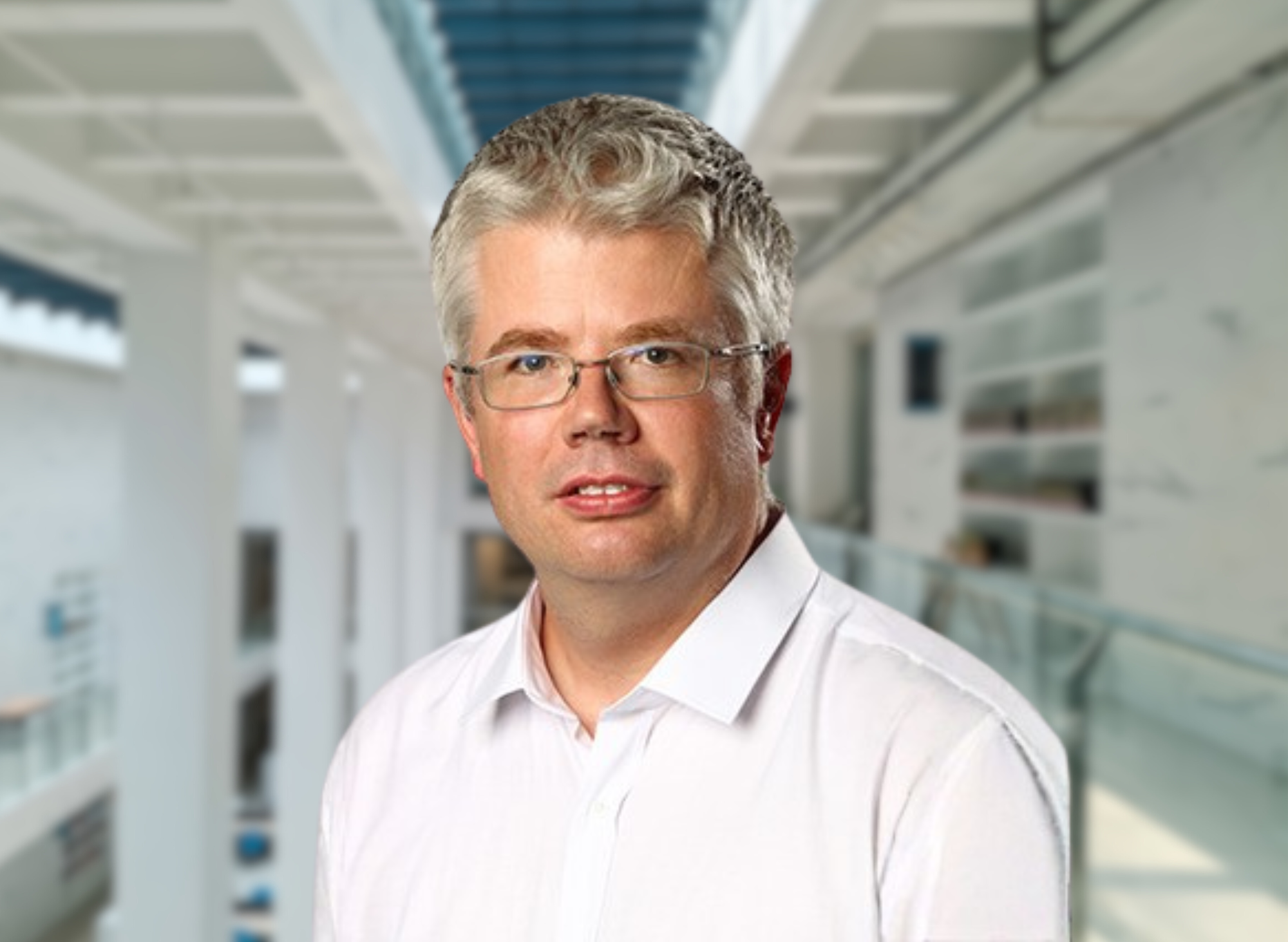
Tell us a bit about yourself
Born in Prague, I am a polymer chemist at the Institute of Macromolecular Chemistry of the Czech Academy of Sciences, where I have worked since 1998 and have led the Department of Supramolecular Polymer Systems since 2020. I studied organic and nuclear chemistry at Charles University (M.Sc., 2002) and completed my PhD in macromolecular chemistry on polymeric micellar drug-delivery systems (2006).
I later obtained a DSc. (2016) in stimuli-responsive polymers for medical applications (2021), and was appointed Professor of Macromolecular Chemistry at Charles University (2023). My research focuses on smart polymer materials that self-assemble into nanocarriers, hydrogels, and radiolabeled systems for targeted transport and controlled release of drugs and radionuclides, especially for the treatment of cancer and inflammation. I have co-authored more than 235 peer-reviewed papers and contributed to patents and technology transfer, while mentoring PhD and MSc students and teaching courses on polymers in biomedicine.
How are you connected to EATRIS?
Together with Dr. Petr Štěpánek, I represent the Institute of Macromolecular Chemistry (IMC) within EATRIS-CZ, the Czech national node of EATRIS-ERIC. Through IMC and its SUPRAMOL centre, we contribute polymer and nanomaterial expertise to EATRIS research platforms (notably Small Molecules and cross-cutting Imaging/Tracing and Biomarker-enabling technologies). We provide EATRIS users with custom polymer synthesis, microfluidic formulation, radiolabeling, and advanced physico-chemical characterisation of nano-objects to help de-risk translational projects.
What is your current research focusing on, and what’s the potential impact on human health?
My group develops stimuli-responsive polymer systems that can be activated by disease-relevant signals such as pH, reactive oxygen species (ROS) and temperature. By tuning polymer architecture and self-assembly, we create nanoparticles, polymersomes and injectable hydrogels that release their payload selectively in inflamed or tumour microenvironments, aiming to improve efficacy while reducing systemic toxicity.
A major direction is theranostics: incorporating imaging functionality (for example, fluorine-19 MRI tracers) so that the distribution and fate of the carrier can be monitored non-invasively. In parallel, we design antifouling polymer coatings and polymer-based sensors that can report early signs of inflammation or infection around implants.
Overall, these materials address key unmet needs in precision medicine: better targeted delivery, real-time monitoring of treatment, and smarter biomaterial interfaces that lower complications and improve patient outcomes.
What challenges do you face in this field, and how do you approach overcoming them?
Translating elegant polymer designs into clinically relevant products is challenging: nanoformulations must be reproducible, scalable, stable, and safe, and their performance depends on complex biology. We tackle this by combining controlled polymer synthesis with microfluidic, process-controlled self-assembly and rigorous multi-method characterisation (size, morphology, surface charge, and responsiveness).
We then iterate designs based on quantitative structure–property relationships and collaborate closely with biologists, clinicians, and imaging experts to validate performance in relevant models. Early attention to manufacturability and regulatory expectations helps us design systems that are not only scientifically interesting but also realistically translatable.
How do you incorporate patient engagement or collaboration into your research process?
As a materials-focused lab, we engage patients indirectly by collaborating with clinical partners who define unmet needs, clinical constraints, and meaningful endpoints (e.g., reducing toxicity, enabling non-invasive monitoring, preventing implant-associated infection). These collaborations shape our design choices and the way we test prototypes.
Patient-relevant input is essential to avoid “technology push” and to ensure that new materials solve real problems, fit clinical workflows, and ultimately deliver measurable benefit. An example of this approach is our cooperation with the Motol hospital that led to the successful development of polymer sensors for real-time detection of inflammation/infection markers.
What future trends or technologies in translational medicine excite you the most?
I am excited by the convergence of precision biomaterials with data-rich diagnostics: image-guided theranostics, non-proton MRI, and implantable sensing combined with antifouling surfaces. Equally important is the move toward robust, scalable manufacturing of nanomedicines, including microfluidics and quality-by-design approaches. These trends will push our work toward more standardised, clinically compatible formulations, and toward materials that not only deliver therapy but also report on where they are and what they are doing in the body.
What has been the most rewarding moment in your career so far?
Besides having developed nicely working systems (e.g., stimuli-responsive polymer systems, polymer copper and cationic animal venoms scavengers), especially rewarding for me is that several of my former PhD students established or are establishing their own research groups in this country and abroad with their original independent research topics.