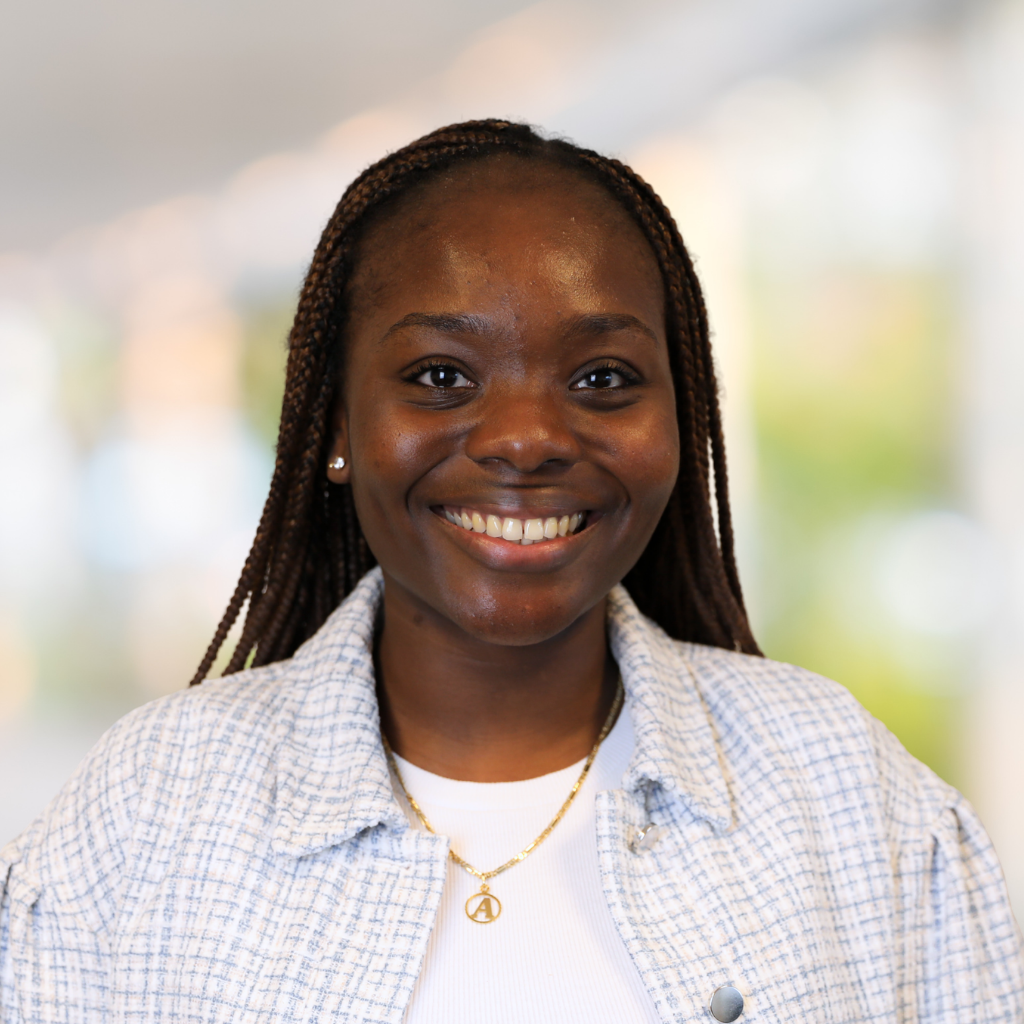
EATRIS Meets is an interview series that celebrates the amazing people in the EATRIS community. In this edition, we spoke with Adeola Adeoti, EU Grants and Project Manager for EATRIS.
Tell us a bit about yourself
Born and raised in Belgium, I grew up in a multilingual and internationally oriented environment that shaped my global outlook. With an academic background in languages and international relations, I developed a strong interest in cross-border collaboration and European affairs. This foundation naturally led me towards roles that combine communication, coordination and strategic engagement at the European level.
Early in my career, I worked in communications and events management, where I developed strong organisational and stakeholder engagement skills. I later transitioned into European project management, supporting international consortia in navigating complex funding frameworks.
A defining step in my professional journey was transitioning from the sustainable energy sector into translational medicine at EATRIS, where I apply my European funding expertise in a field directly connected to health innovation and societal impact.
What is your role within EATRIS and what does a typical week look like for you?
I am an EU Grants and Project Manager at EATRIS ERIC, where I support the administrative development, submission and management of European-funded projects. My role connects scientific teams, partner institutions and the European Commission, ensuring that proposals and ongoing grants comply with funding rules and requirements.
In a typical week, I advise partners on eligibility questions and administrative procedures, support the submission process from an institutional perspective, and guide project coordinators on reporting and compliance obligations. For ongoing grants, I monitor reporting timelines, review deliverables from a compliance angle and help address contractual or governance-related questions.
Some weeks are more focused on proposal periods, while others centre on supporting active projects. Throughout, I aim to provide clarity and structure so colleagues can focus on delivering impactful translational research.
What has been the highlight of your EATRIS experience so far?
One of the highlights has been successfully transitioning into the translational medicine field and seeing how collaborative and mission-driven the EATRIS community is. Contributing to strong European proposals and supporting projects that aim to accelerate innovation in healthcare has been particularly rewarding. It is inspiring to work in an environment where the ultimate goal is to improve patient outcomes.
What is translational research for you?
For me, translational research is about connecting scientific discovery with real world medical solutions. It ensures that promising research findings move beyond publications and are developed into diagnostics, therapies or preventive strategies that benefit patients.
It requires collaboration across disciplines, strong infrastructure, regulatory understanding and sustainable funding. Translational research is not only about innovation, but about making that innovation accessible and impactful.
Why did you decide to work in the translational medicine field?
After working in the energy storage sector, I wanted to contribute to a field with a more direct impact on human health. Translational medicine combines scientific excellence with tangible societal benefit, which strongly resonates with me.
Although I am not a scientist, my work in European funding and coordination helps create conditions that allow innovation to move closer to patients. Being part of that process gives real meaning to my work and motivates me every day.
What advice would you give your younger self?
I would remind myself that my background does not define what I am capable of achieving. There is so much to discover in life, and each stage is part of a bigger picture, even though everything may not initially make sense. I would encourage myself to enjoy every phase, even the uncertain ones, and not wait until I feel completely ready before taking on new challenges, because growth often begins in unfamiliar spaces.
What do you like to do when you aren’t working?
I enjoy reading, travelling and spending time with family and friends. I love discovering new things through travel and everyday exchanges. I also engage with young people through mentoring and community initiatives, and moving between Europe and Nigeria allows me to stay connected to my roots while continuing to learn from different environments.
If you were a drug, vaccine or diagnostic, what would you be and why?
I would be an early diagnostic tool for cervical or breast cancer, enabling timely detection and improving survival rates. Early diagnosis saves lives, and I value solutions that empower women through access, prevention and informed care.
What would surprise people to know about you?
People might be surprised by how intentional I am about embracing both my European upbringing and my Nigerian heritage. This has shaped how I see the world and work with others. At the top of my bucket list is exploring more of the African continent and experiencing its diversity firsthand. Navigating different worlds keeps me curious, grounded and open-minded.